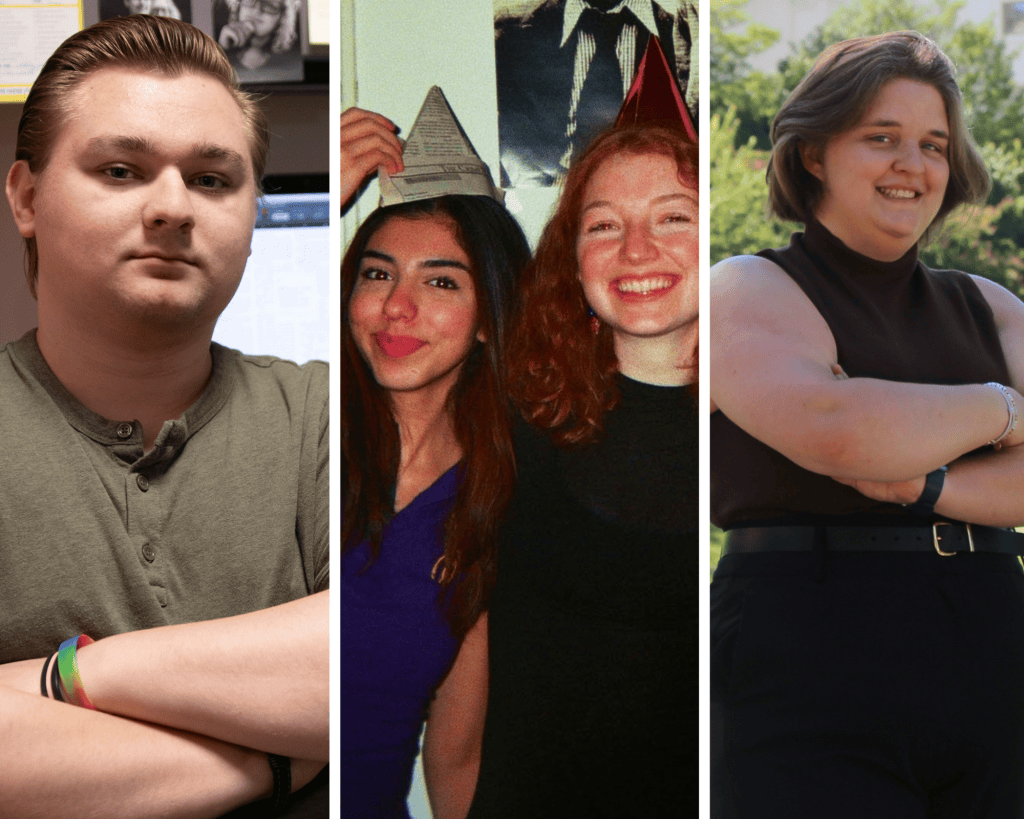
Four college journalists speak out on the importance of standing up to administrators
By Jennifer Nehrer
This story was co-published by the Student Press Report and the National Press Club Journalism Institute.
‘It’s our noble duty to resist’
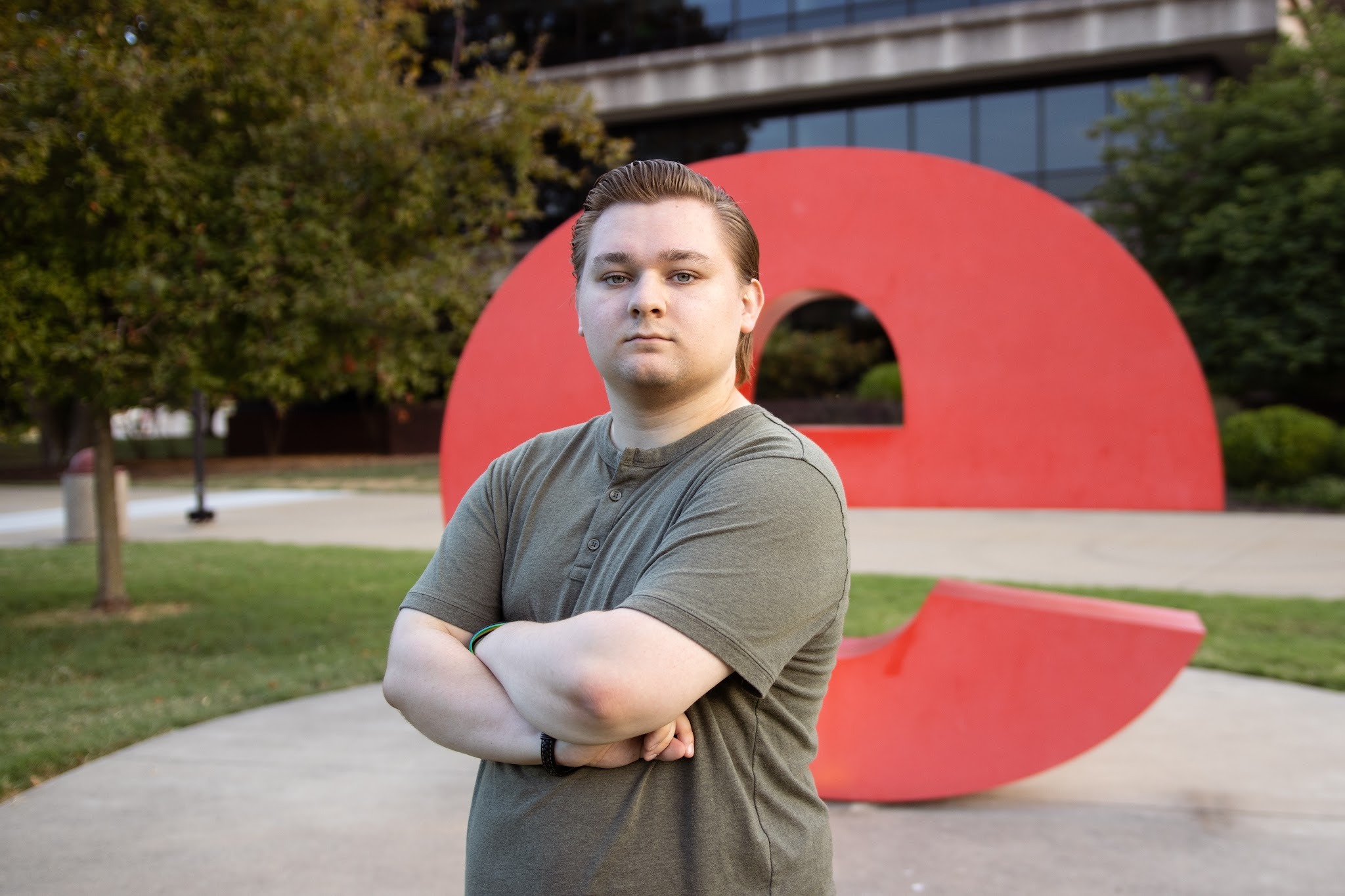
By Dylan Hembrough, Southern Illinois University Edwardsville
Editor’s note: Shortly before publication of this piece, the Foundation for Individual Rights and Expression updated its file to report that the communications department at SIUE contacted law enforcement to accuse the author of engaging in “harassment.”
I have served as editor-in-chief of The Alestle, the independent student newspaper at Southern Illinois University Edwardsville, for three years now, so I have seen the gradual — and then dramatic — degradation of our relationship with SIUE’s administration.
It started in fall 2024 after we published a story exposing practices in University Housing that stifled employees’ freedom of speech. The university’s legal counsel said in a letter to the Foundation for Individual Rights and Expression that SIUE believed The Alestle’s reporting was inaccurate. When I asked over email what was inaccurate about the story in order to issue a correction, she refused to say.
In March 2025, we published a 15-month investigation into the administration’s “salary sweeps,” which at that point had resulted in more than $15 million being taken from departments across campus and put into a series of “strategic” accounts. While unfortunately there ended up being a couple of inaccuracies in our article — we had inadvertently underreported how much administration actually took, and apologized appropriately — Chancellor James T. Minor used this as an excuse to close off communication with The Alestle about this subject.
In February 2026, our chancellor sent a letter to “university leadership” — deans and heads of departments — baselessly discrediting our reporting. This letter was sent in response to a breaking story we published a few days earlier, detailing the clerical workers’ union’s decision to file a cease-and-desist against SIUE for unfair labor practices. Despite calling our reporting “predictably poor, inaccurate and incomplete,” the chancellor provided zero evidence of any actual inaccuracy.
Most recently, University Marketing and Communications — which is in close contact with the chancellor and shares his disposition on The Alestle — began demanding to sit in on and record some of The Alestle’s interviews. Moves such as these threaten freedom of speech and freedom of the press, allowing the SIUE administration to shape a story in real time and potentially frighten employees into self-censoring.
And through it all, SIUE claims it is fully supportive of a free, independent student press. Clearly, its actions do not match its words.
What keeps us at The Alestle reporting is our dedication to the truth, to the facts and to our duty to disseminate information to the campus community. The administration is well-known by now for its lack of transparency and, now that it sent an open letter to every university community member making a number of false claims about The Alestle, its complete willingness to distort reality to fit its narrative.
This retaliation is insulting to the campus community, and it’s our noble duty to resist. We’ve learned a few lessons along the way: lean on each other when the going gets tough, take solace in the fact that the truth will break free, and take pride in the fact that you, as a journalist and quite literally a writer of history, are instrumental in revealing the truth.
Dylan Hembrough is the editor-in-chief of The Alestle at SIUE. He will graduate with a doctorate in pharmacy in 2028.
The truth on trial
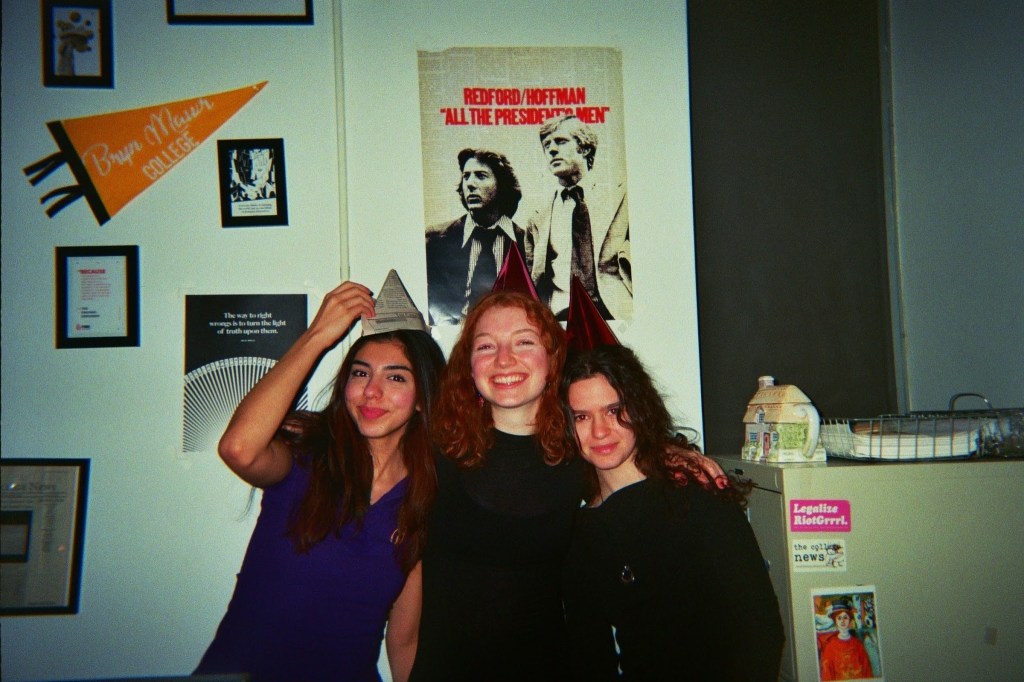
By Hannah Epstein and Rana Rastegari, Bryn Mawr College
In October of last year, multiple students approached the Bi-College News, the independent student newspaper serving both Bryn Mawr and Haverford colleges. They all told us similar — and shocking — stories: They had been asked via email by the dean of Bryn Mawr’s undergraduate college to attend confidential meetings, with no reason provided.
They found themselves in a room alone with two individuals who identified themselves as private investigators. No school official was present. The students were then questioned on their peers’ political beliefs and about pro-Palestinian activism on campus.
As co-editors-in-chief of the Bi-College News, we both knew that this was an important story. So, despite concerns about administrative pushback, we pursued it.
Our priority was protecting our sources, who trusted us to relay their experiences despite legitimate concerns that the college could retaliate against them. Because it’s a private institution, Bryn Mawr students have far fewer protections. Given that the meetings were intended to be confidential, the college could have retaliated against these students.
But we also took our own credibility seriously: Every testimony was corroborated with private messages, emails and background sources.
Three days before we planned to publish our investigation, we sent an extensive and transparent list of questions to the president’s office asking about each alleged secret meeting. The president and her staff declined to comment, offering instead a statement regarding college policies on investigative procedures.
Our story circulated widely online and between students, who expressed that they felt their trust in the administration had been betrayed. Students, alumni and faculty members publicly condemned the college. It was a week before the administration pushed back, which came in the form of an unexpected, campus-wide email.
Bryn Mawr President Wendy Cadge’s email stated that several claims in our article “greatly misrepresent(ed)” Bryn Mawr’s investigative procedures. It went on to encourage student journalists to maintain “best practices,” notably including “multiple sources, accurate quotation, opportunities for comment, and consistent, accurate use of those comments.” Later that same day, Cadge went to an open forum and further attempted to discredit our work.
It was incredibly disappointing to know that Bryn Mawr’s administration chose to attempt to undermine our investigation instead of addressing it. But we took these accusations seriously, as any journalist would. Maintaining trust between our publication and our readers is of utmost importance to us and we knew we had to set the record straight.
We gave Cadge and her office a second opportunity to comment and correct the record following this. Via email, Cadge’s office was unable to point out any factual inaccuracies in our reporting.
However disheartening the university’s response to our investigation, the support from our editorial board and student body motivated us to push back against accusations of misinformation. We put out a direct response to the president, co-signed by the entire editorial board, which included screenshots of our correspondence with Cadge’s office in which we had offered them a chance to comment on each allegation ahead of publication. Our intention was to ensure our sources were not harmed in sharing their stories and to stand firmly by our newsroom practices.
Student journalism holds institutions accountable and gives young people a voice in their campus communities. The Bi-College News has remained dedicated to that mission for decades and we don’t intend to stop now. As student journalists across the nation will confirm, our publications are under constant scrutiny but our commitment to the independent press and free speech will never waver.
Hannah Epstein and Rana Rastegari graduated in May from Bryn Mawr College, where they served as co-editors-in-chief of the Bi-College News, the student newspaper serving Haverford and Bryn Mawr colleges. Epstein is a Thomas J. Watson Fellow working on a yearlong research project about journalism initiatives in post-conflict countries, while Rastegari is a newsroom fellow at WHYY in Philadelphia.
‘The student agenda is truth’
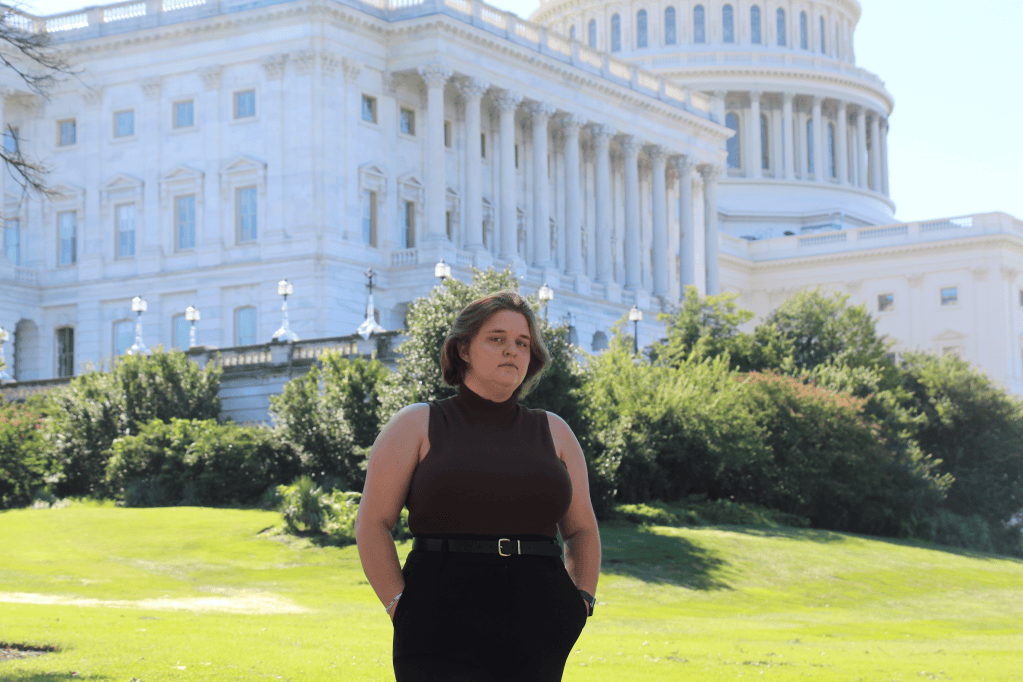
By Jennifer Nehrer, University of Southern California
I was getting ready to eat dinner when my roommate yelled out the news: My university had been caught taking bodies donated to our medical school and selling them to the U.S. Navy, which in turn sold them to the Israeli military. The details were mind-boggling and, naturally, Annenberg Media’s student investigative team wanted to learn more. We reached out to other California universities that may have been involved and teamed up with a reporter at UC San Diego, which ran a similar program.
When my editor asked if anyone wanted to help find families who may have been affected, I was in. On multiple occasions, I was the one tasked with informing still-grieving family members that their relative’s body might not be under the care of medical school students but of foreign military forces. They had no idea this was a possibility when the donation occurred.
This is when I saw just how shaken these two universities were: They stalled, obfuscated and fought back against our investigations. They lied in emails responding to our questions — when they answered the questions at all. They fought with us over the smallest definitions to delay our reporting and sometimes resorted to calling us with information so we wouldn’t possess a written record.
When Annenberg Media published our joint story with The UCSD Guardian, most of the public comments about our reporting were nicer to us than the schools had been. One in particular on a joint Instagram post caught our attention: After reading our work, a woman said she emailed UCSD to rescind the eventual donation of her body to its medical school. In response, she told us, she received an obviously hastily written letter accusing us of spreading lies and being “student reporters with an agenda” instead of investigative journalists who wanted to share truth with the world.
As my fellow student journalists will tell you, we joined journalism programs and school newspapers to learn and do journalism with the support of our universities. It becomes increasingly clear, however, that these and presumably other schools want to teach us the power and ways of the free press without being the subject of them. We won’t tolerate that hypocrisy.
I hope that as you read these vignettes, written by a group of fantastic student journalists, you came away with the same conclusion reached by a commenter on AJ+’s YouTube video featuring the comments made by UCSD officials — the same phrase I pasted onto a photo of my student newsroom and hung on my wall at home:
“The student agenda is truth.”
Jennifer Nehrer graduated from the University of Southern California in May and is set to start a job as a news associate at CNN in Washington, D.C., later this month.
If you are a student journalist who’s stood up to authority — or know one who has — please email Barbara Allen, editor of the Student Press Report, at bob@collegejournalism.org for possible inclusion in a future story.

Leave a comment