College journalists are embracing their responsibility to educate and inform campus and community about elections — many for the first time
By Joshua Levin
Despite young voters being notoriously absent at the polls and their relative inexperience covering politics, student journalists across the country have kicked into high gear ahead of the 2026 midterm elections.
From statewide collaborations to basics like voter registration guides and candidate platform information, here’s how student newsrooms across the country have been gearing up to preview and cover the midterms.
A statewide effort in North Carolina
At The Duke Chronicle, coverage started by showing readers the basics – how to register to vote in North Carolina and what they need to bring to the polls.
“From there, we can start building on people’s knowledge about what’s going to be actually on their ballot,” said Claire Cranford, a Duke University senior and The Chronicle’s news editor, who is leading the paper’s election coverage.
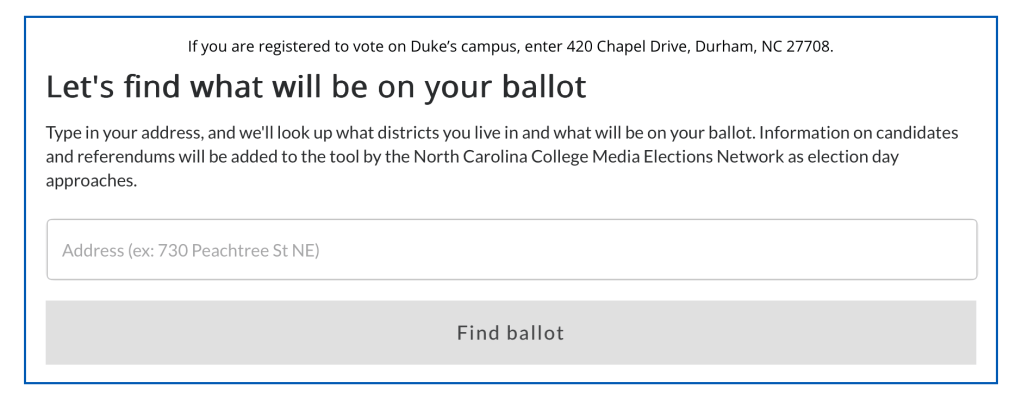
In addition to publishing about two dozen election-related articles and a special print edition, The Chronicle has led a collaboration between student newspapers across North Carolina, sharing resources such as voter guide templates and coverage checklists with participating newsrooms. Those organizations also have access to Branch, a tool embedded at the bottom of articles that allows readers to look up information about candidates and issues.
“There are certain things (The Chronicle does) every year, like the voter guides (and) issue explainers. Those are constants across election cycles,” Cranford said. But since many student newsrooms lack that foundation, Cranford led the charge of the collaboration. “Why not lend a helping hand if we can? We have the resources. We have the capacity to do so. Why not?”
Collaborating newsrooms include The Daily Tar Heel at the University of North Carolina at Chapel Hill; The Technician and The Nubian Message at North Carolina State University; The Old Gold & Black at Wake Forest University; and The East Carolinian at East Carolina University.
And it’s a notable state for such a collaboration. The results of North Carolina’s races could have a huge impact, as this swing state may help determine control of the Senate. Republican Sen. Thom Tillis decided not to seek reelection, leaving former Gov. Roy Cooper, a Democrat, to face Michael Whatley, a Republican, for the open seat. Recent polls show Cooper up about 10 percentage points.
“I think student papers are uniquely trusted on campus to do this,” Cranford said. Students are more likely to read an election article from The Chronicle than from local professional outlets, she said, “because it may have been written by a friend or at the very least a peer, and so there’s a sense of connection.”
That trust extends beyond those on campus.
“Our largest audience is, in fact, not student-aged people. … It’s our goal to take advantage of that and harness that to encourage people to vote – and not just to vote, but to be knowledgeable and informed about what they’re voting on,” Cranford said. “I wouldn’t measure success by turnout. I would measure it by whether one more student walked into the polls knowing what was on their ballot.”
Election opportunities in Ohio
Ohio University students at The Post are also covering elections in a battleground state. Editors started talking about the election in September, and have since published about 30 related articles, including a special section in print. Coverage included a guide on voting and explainers on state issues and local levies.
Elizabeth Talaga, a senior and the editor-in-chief of The Post, said her staff has taken care to cover local races, including the election of a county commissioner, in addition to statewide issues. She said the staff has worked hard to prioritize relevant content that appeals to readers.
“Even if there’s a big national story, we always try to have a local tie to it if we can,” she said. “We really want to make sure that our coverage is diverse and fair, and we want people to feel like they can come to us.”
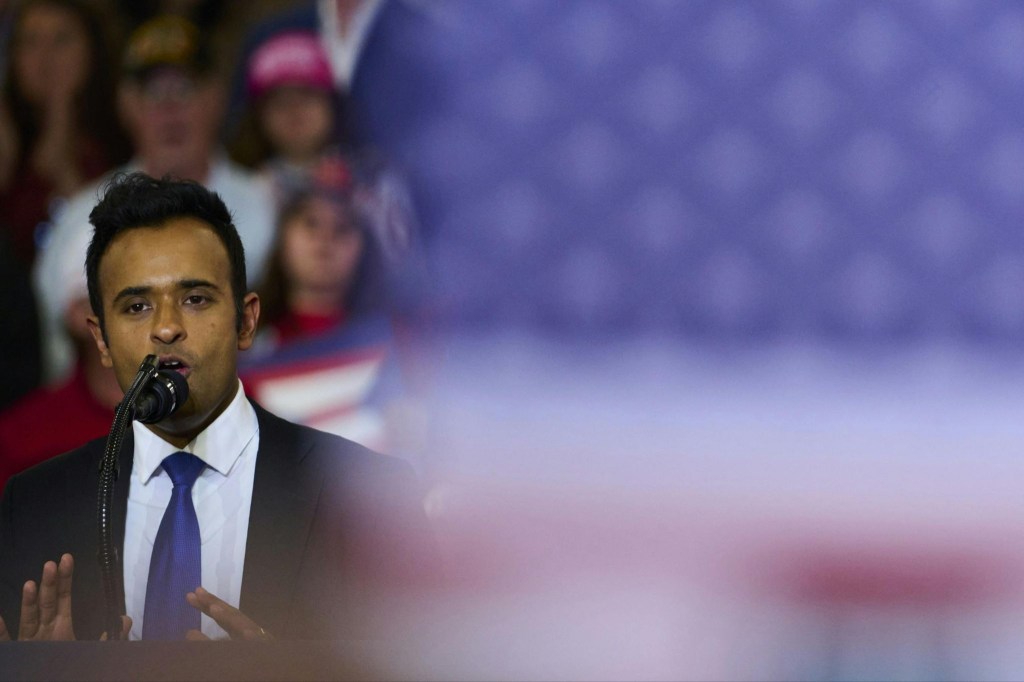
The paper has also covered the two hotly contested races at the top of the ticket, both of which have received national attention. For the governor’s office, Democrat Amy Acton is competing with Republican Vivek Ramaswamy to replace Republican Gov. Mike DeWine, who is term-limited. Ohio will also elect a U.S. senator as Democrat Sherrod Brown, who lost his Senate seat in 2024, attempts to unseat Republican Jon Husted.
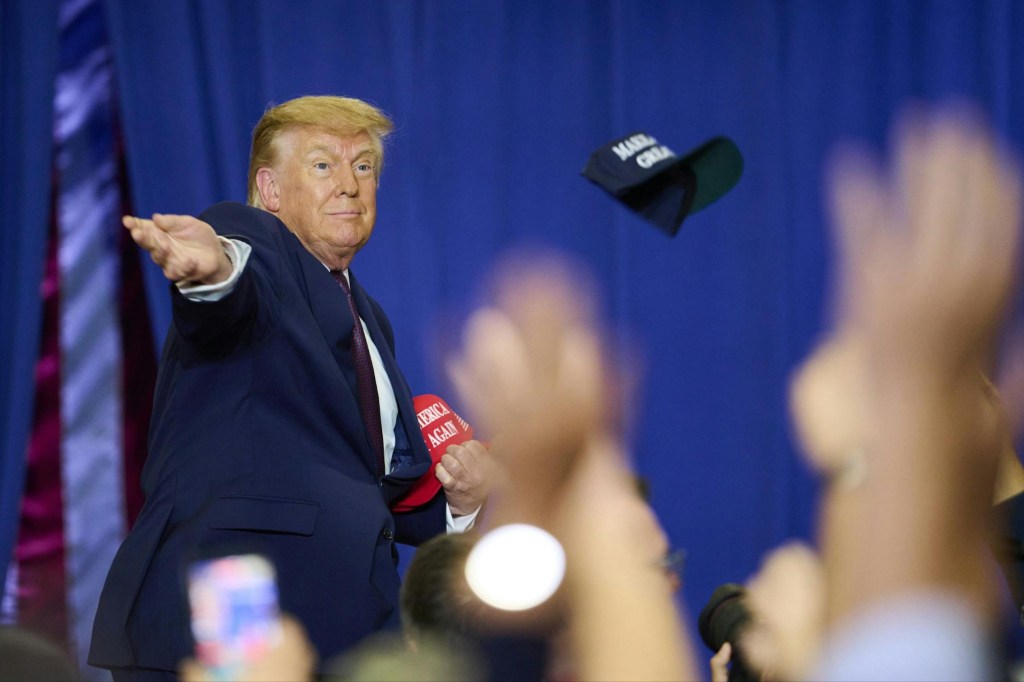
In addition to coverage of nearby appearances by Brown and Ramaswamy, Talaga and photographer Andy McLean received press credentials to cover a rally for Ramaswamy and Husted that featured President Donald Trump.
“That was a crazy experience,” Talaga said. “We were the youngest people there in the press pool as student journalists, and so that was a really big deal for us.”
The Post’s newsroom will also be active on election night, with reporters and photographers assigned to cover the board of elections and watch parties at local bars.
“It’s going to be a full house, which I think is always exciting. I love when people are in the newsroom and working. It’s just such a cool environment to be in,” Talaga said.
One thing you won’t find in The Post’s newsroom on election night is pizza, the traditional newsroom meal. The staff opted for pancakes this year.
A voter guide in Texas
Smaller student outlets like The Mesquite, the digital-only publication at Texas A&M San Antonio, published a voter guide for the midterms, as well as coverage of voter registration efforts. The site, founded in 2011, has eight staff members.
“We still wanted to continue to do election coverage and make sure that we’re covering that – especially elections that are geared toward our university,” said Trinity Hewtty, a senior and the publication’s editor-in-chief. In two hot races impacting all Texans, Democrat James Talarico faces Republican Attorney General Ken Paxton for a U.S. Senate seat, and Democrat Gina Hinojosa competes with incumbent Republican Greg Abbott for the governor’s office.
The Mesquite is also producing a video interviewing representatives from MOVE Texas, a voter turnout organization that was founded at the University of Texas at San Antonio in 2013, to be published ahead of Election Day.
“One thing that we have noticed is (that) not a lot of students, I think, actively vote, even though we have our own voting location there on campus,” Hewtty said. “As our campus newspaper, and as a student publication, I feel like it’s important that we just educate our student body as much as possible.”
Joshua Levin is a student and freelance journalist in Boston. He served as managing editor of UMass Boston’s student newspaper, The Mass Media, where he was a regional finalist for the SPJ Mark of Excellence and a winner of the SPJ New England FOIA Contest.

Leave a Reply